Many of the emigrants who came to early South Australia worked as agricultural labourers.
In the early 1800s, more than half of the people in Great Britain depended on farming for their livelihood.
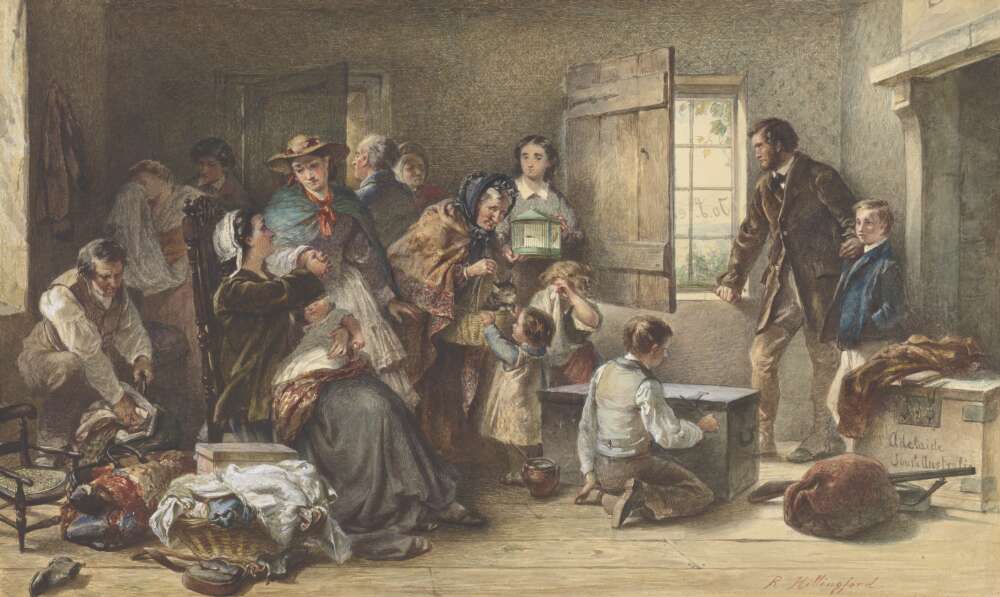
Many agricultural labourers were employed on a casual or yearly basis, meaning that they did not have secure employment. To help support the family, women and children often worked in cottage industries such as lacemaking and straw plaiting.
Blacksmiths, wheelwrights and millers all relied on the farming industry for work.
At the same time, new machines were reducing the number of workers needed on farms. Low wages and the threat of unemployment led to unrest in rural communities. Some workers protested by burning haystacks and farm machinery during a period known as the Swing Riots.
Many southern counties of England were experiencing hard times, and agricultural labourers often lived in poverty. Families usually lived in small two-bedroom cottages that were rented or provided by the estate where they worked.
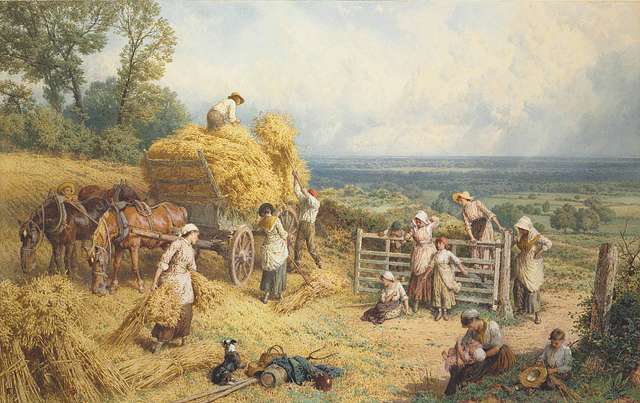
A labourer’s day often began at about 5 a.m. with a walk of up to 3 kilometres to the farm. Some workers, such as cowmen and horsemen, started even earlier. During the lambing season, shepherds often stayed near their flocks in small huts.
Children usually began working at the age of seven or eight. Their first jobs included scaring birds away from crops, picking stones from fields and weeding.
Workers who were employed on a yearly contract often moved each year and attended hiring fairs to find new employment.
South Australia needed large numbers of agricultural labourers to work on the farms that colonists and investors established. The sale of land in the new colony helped to pay for the passage of these workers and their families to South Australia.
South Australia offered an opportunity for agricultural labourers and their families to improve their life.
Understanding the terms used:
- agricultural labourer – also known as a farmhand or agricultural worker. They worked planting and harvesting crops, feeding, raising and caring for animals on the farm
- cottage industry – before the development of factories many things were made at homes. examples included lacemaking, nail forging, button manufacturing, and straw plaiting
- swing riots – was an agricultural worker upraising in the southern and eastern England in 1830, they were protesting mechanisation, low wages and the harsh rural conditions


Leave a Reply