Law and order in South Australia was different from other colonies of Australia. rather than evolving the Supreme Court was established at the time of settlement.
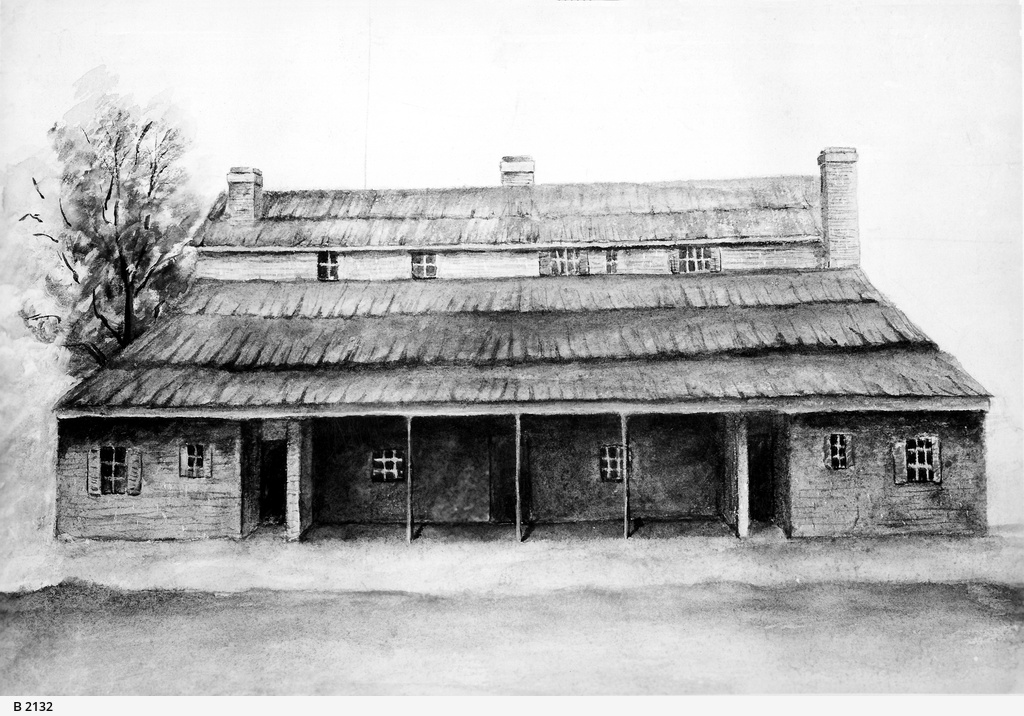
- The first judge, Sir John Jeffcott was appointed Chief Justice to the Court before the first party of colonists set out on their voyage.
- Five days after the colony was proclaimed on 28 December 1836, the Supreme Court of South Australia was established by ordinance on 2 January 1837
- The Supreme Court of South Australia had all the common law, equitable and probate jurisdictions of the Westminster Courts.
- The Chief Justice and the Supreme Court was a dispenser of legal justice for the 546 British citizens then resident in the colony and had lots of power.
- The first criminal sessions of the Supreme Court were held under Justice Jeffcott on 13 May 1837.
You can learn more about the Supreme Court in South Australia here: https://prosecutionproject.griffith.edu.au/other-resources/south-australian-courts/
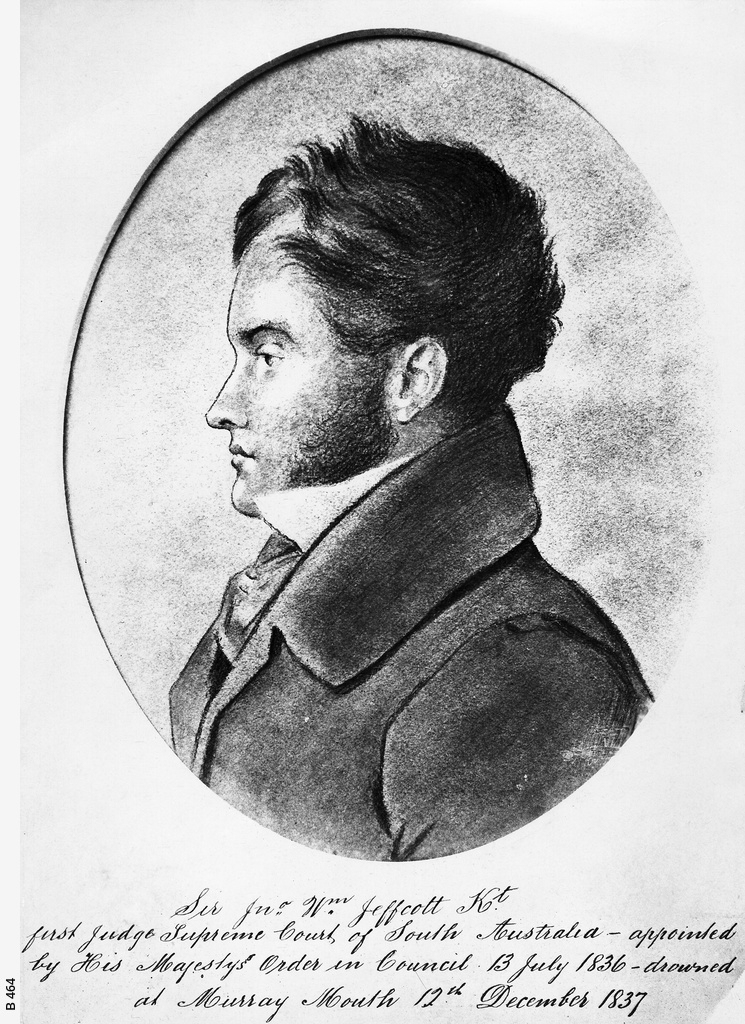
Constables Appointed for Law and Order from 1837
A month after the colony was established special constables were appointed to keep the peace and to guard against the Royal Marines who had arrived with Hindmarsh as his body guard and keepers of the peace who had become drunken riotous.
The founders of the colony had hoped that a police force would not be needed. By November 1937 Hindmarsh had requested that a strong police body be established. This happened in 1838.
Have a look at the following sites to learn more about the early police force:
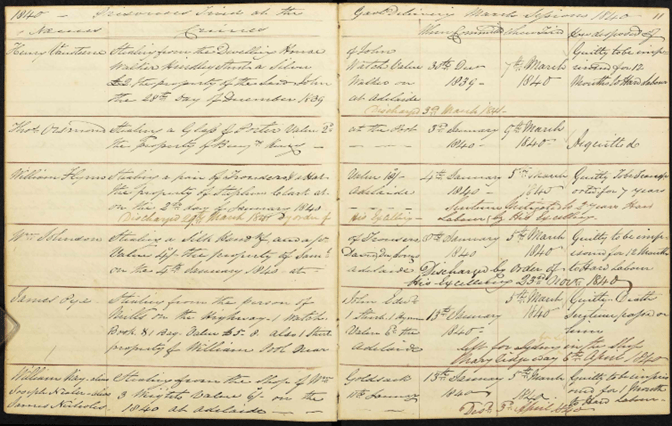
In 1839 the Royal South Australian Almanac listed those who held positions in the Courts of Law and the Police.
The officer of the Courts of Law were the: Chief Judge, Advocate General, Clerk of the Court, Sheriff, Chief Constable, Barristers, Solicitors, Attorneys, Proctors, Magistrates and Justices of the Peace.
Those who worked for the Police Establishment included: Superintendent, Inspector, Second Inspector, Governor of the Gaol and 40 police constables.
At this time there was no Military Force in South Australia, apart from the Royal Marines with Hindmarsh.
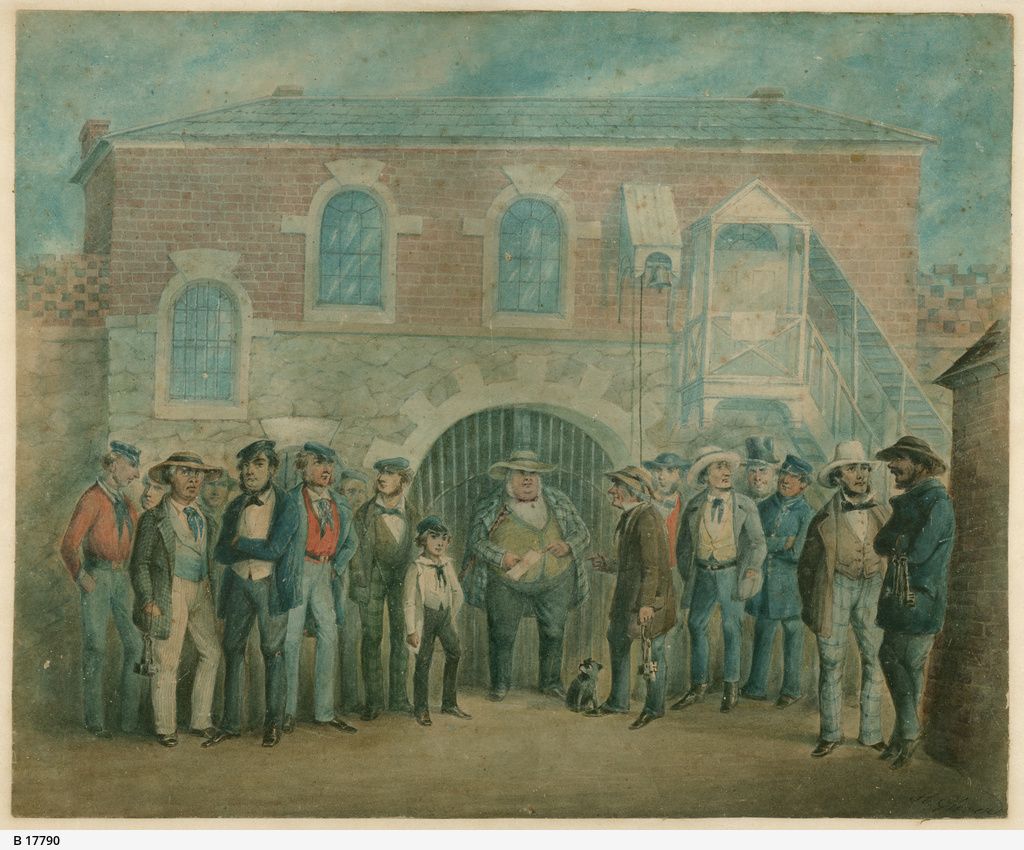
The 1841 The Adelaide Gaol opened
The Military
In 1841 the Eudora arrived in Adelaide from Hobart Town with two companies of the 96th Regiment of Foot, one of their roles was the protection of out stations as the colony grew.
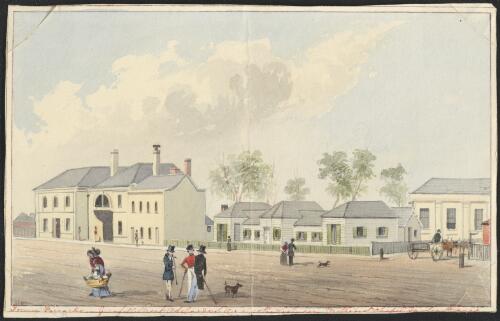
For more information have a look at: https://www.charlessturtmuseum.com.au/resources/booklets/imperial%20regiments%20in%20south%20australia.pdf
Transportation
Convicts were not transported to South Australia.
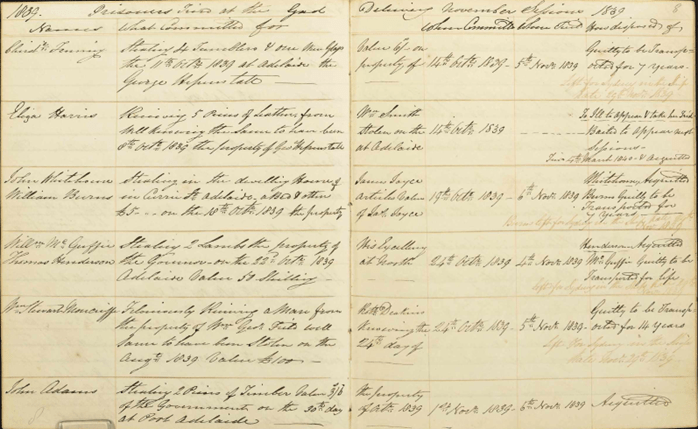
People convicted of serious crimes in South Australia could be sentenced to transportation to the convict colonies of New South Wales or Van Diemen’s Land. Usually, the convicts were transported by small coastal trading ships.
In 1852 South Australia stopped the act of transportation as a form of punishment.
Capital Punishment
Capitol punishment was the most extreme penalty and was abolished in South Australia in 1974.
Death by hanging was the common form of capital punishment and a total of 66 people were hung in South Australia.
The first person to be hanged was the Irish man Michael Magee for shooting Sherriff Smart in 1838. He was hanged from a tree near the River Torrens.
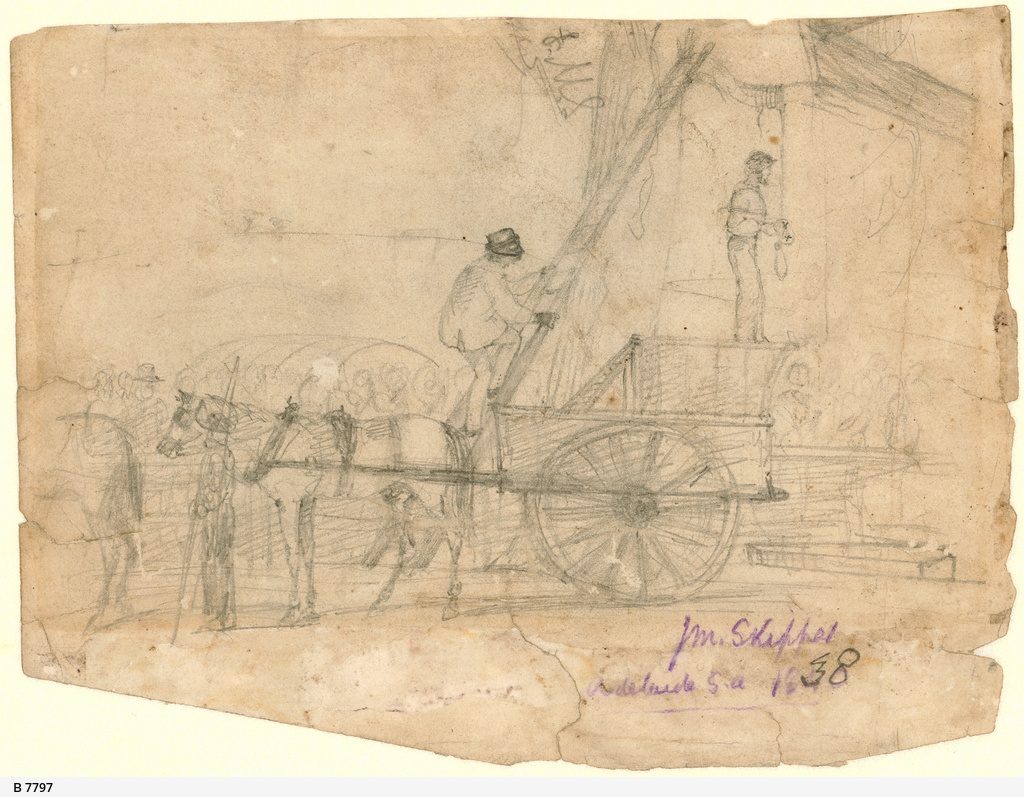
Learn more about it here: https://adelaideaz.com/articles/botched-1838-hanging-in-north-adelaide-of-michael-magee–who-shot-the-colony-s-first-sheriff–samuel-smart
Two Aboriginal men were hanged from the same tree for murder in 1839.
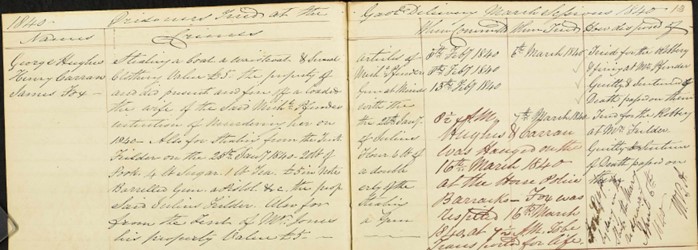
In 1840 two men George Hughes and Henry Curran were hanged at the then Police Barracks located behind the State Library on North Terrace. In the same year the first public hanging at the Adelaide Gaol occurred. Joseph Stagg was convicted of murder and publicly hanged. There was a crowd of onlookers numbering approximately 700 people.
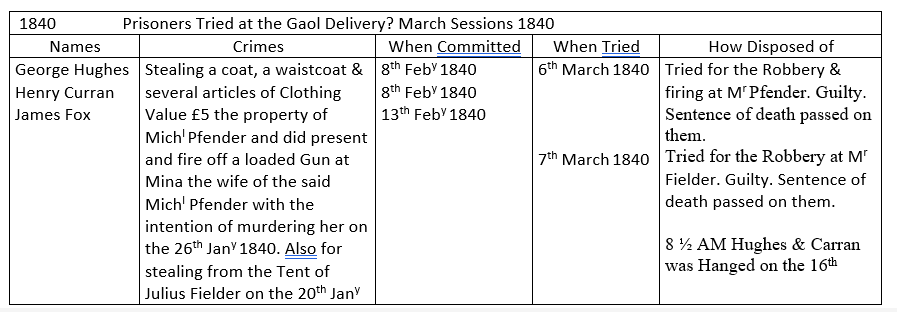
From the newspaper of the day:
Yesterday morning at eight o’clock, Curran and Hughes, tow of the criminals sentenced to death at the late assizes, suffered the penalty of their crimes on a scaffold erected in the square of the Police Barracks which was temporarily inclosed for the occasion. The prisoner Hughes behaved with the most hardened indifference, and seemed perfectly in-sensible to the awful change which awaited him. He mounted the scaffold with a pipe in his mouth. and appeared to pay no attention whatever to the earnest exhortations of the Rev. T. Q. Stow, who attended him. He made two or three rushes at the executioner, telling him that he would ruin him if he put the rope around his neck, and dared him to take the mask off his face, and to do his duty like a man. He resisted to the last, kicking the executioner while in the performance of his duty. Curran, the other prisoner, a Roman Catholic, was attended by Mr Phillips, and appeared penitent and resigned. When his companion in crime resisted the execution of his sentence, he exclaimed “Oh George!” – appeared shocked and distressed at his hardihood and indifference. The executioner was obliged to call for assistance, and as the fatal knot was adjusted, the signal was given, and the trap fell. Hughes died instantaneously, and Curran after a few struggles. However abhorrent such exhibitions may be to the feelings of humanity, it is absolutely necessary that the hardened villains who escape form punishment in the other colonies should be taught that they have no trifler’s hand to deal with here; and that there is a determination, on the part of the Government, to protect to the utmost the lives and property of its constituents. We are happy to say that on this occasion, justice was tempered with mercy, and that the two other prisoners against whom sentence of death was recorded, were reprieved, and their sentence commuted to perpetual banishment. A considerable crowd assembled to witness the execution. Several natives were present, upon whom, we doubt not, the awful scene will have a salutary effect. The greatest decorum prevailed throughout. A body of the mounted police were on duty outside the inclosure, and a strong party were stationed within it. There appeared to be but one feeling among the assembled crowd, which was – that the prisoners deserved their fate.
Adelaide Chronicle and South Australian. Tuesday 17 March, 1840, page 2.
For more information see:
History of the Adelaide Gaol: https://www.adelaidegaol.sa.gov.au/history/history-of-the-adelaide-gaol
Adelaide Gaol – longest serving gaol: https://paranormalandscience.weebly.com/adelaide-gaol.html
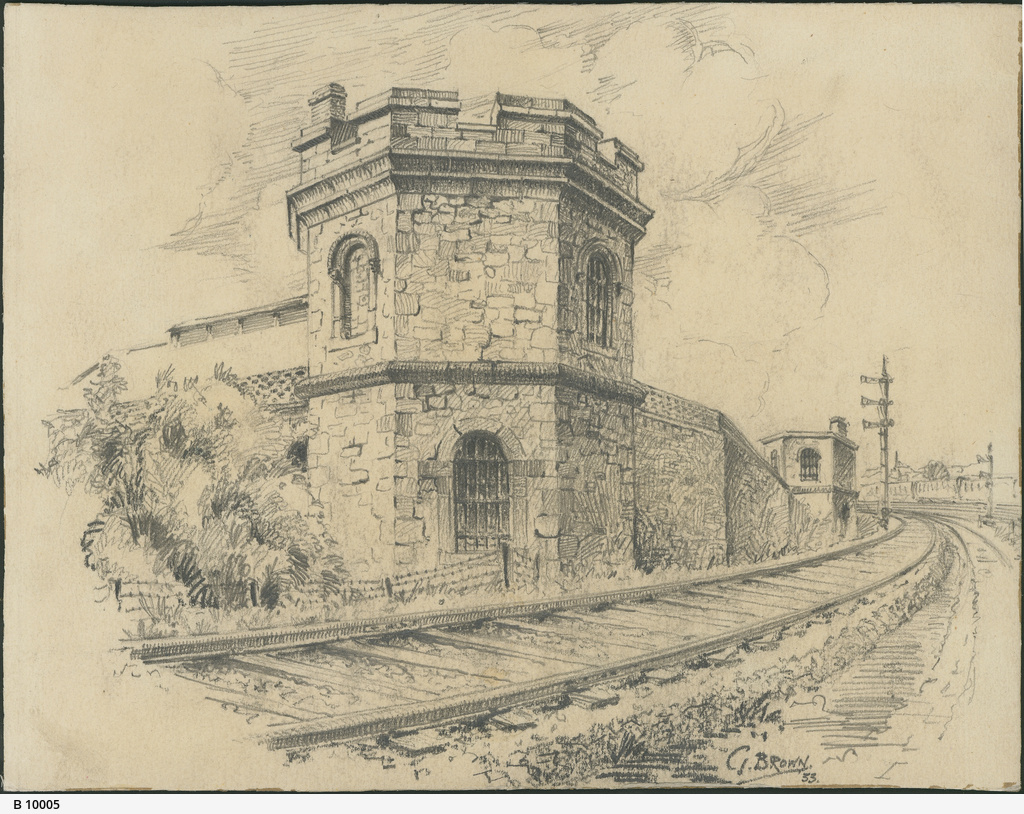
From William Ewen’s Letter
William Ewen, with his wife Sarah and three children, arrived in South Australia on the Prince Regent on the 25th September 1839. He wrote letters to his family and friends in England.
This is an extract from one of his letters:
“4th April 1840. Adelaide South Australia,
Grenfell Street, Tam O Shanter Place
We had 2 men hung if that is any good news to you for plundering in the Bush one of them came on the gallows with A short pipe in his mouth and fought with Jack Cach because he had A mask on his face and would not pull it off for his companions to walay him.”
‘Jack Cach’ is a different spelling of ‘Jack Ketch’. This was a term used for the hangman, named after a famous hangman in London in the 1860’s
 Pioneers SA Learning Hub
Leave a comment